 library@olongoafrica.com
New books are hard to come by affordably. Old ones are harder still — hidden in private collections or in institutions across the ocean.
In 2026, with support from the Open Society Foundations, OlongoAfrica acquired 914 items of literary and cultural significance and is placing them in partner libraries across three Nigerian cities — making them available to readers, students, and researchers on the continent where much of this literature was made.
Cataloguing is ongoing. 553 of those items are described on this site so far, with covers and sample pages — a figure that includes the Black Orpheus journals digitized in the 2025 pilot and now held at orpheus.olongoafrica.com. The rest are on the shelves at our partner libraries and are being added as they are scanned.
This extends the pilot project from 2025, which focused on the Black Orpheus journals — 36 issues across six volumes, 1957 to 1993.
— OlongoAfrica Library mission
The new collection spans literary journals, academic publications, pamphlets, and book series — from the inaugural 1955 issue of Odù: Journal of Yorùbá and Related Studies to thirteen issues of Drumvoices Revue, from rare Onitsha Market pamphlets to 108 issues of Granta. It includes literary, scholarly, and historical materials across decades.
The project runs on the idea that accessibility of books and other cultural materials is an important step in cultural revival.
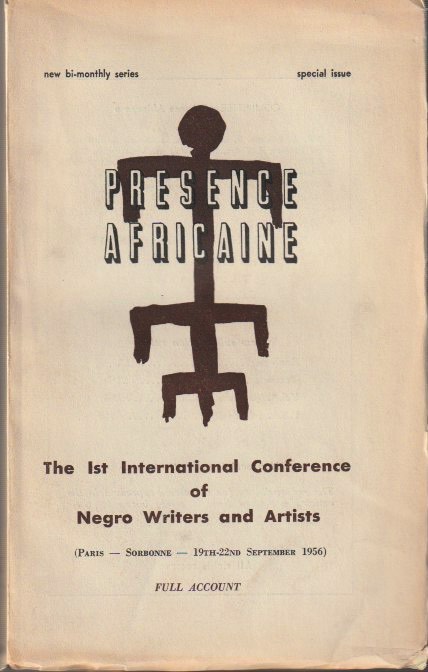
The full account of the Sorbonne congress of September 1956, discussions printed in full — Césaire, Senghor, Fanon, Richard Wright, Cheikh Anta Diop. Two Nigerians speak: E. L. Lasebikan on the tonal structure of Yorùbá poetry, and the painter Ben Enwonwu.
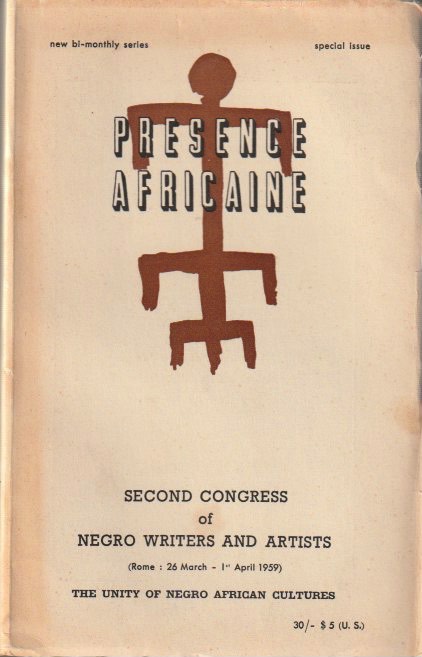
“The Unity of Negro African Cultures” — Fanon on national cultures and the struggles for liberation, Sékou Touré and Eric Williams on the political leader as a man of culture, Mphahlele, St Clair Drake. It closes with an address by Pope John XXIII.
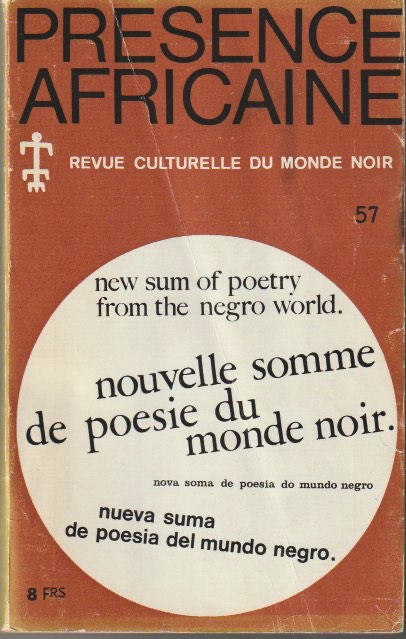
574 pages of poetry from across the Black world, with a liminaire by Césaire that ends “Signe que la Négritude continue.” The Nigerian section carries Okigbo, J. P. Clark, Echeruo and Ṣóyínká; Léon Damas presents the American one.
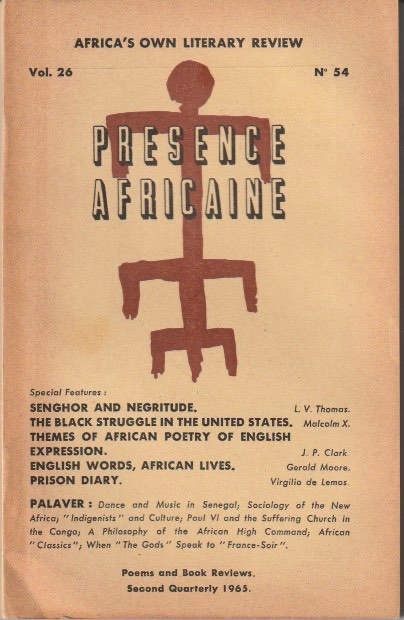
The issue opens with “The Black Struggle in the United States”, printed weeks after his assassination in February 1965. The same number carries J. P. Clark on African poetry of English expression.
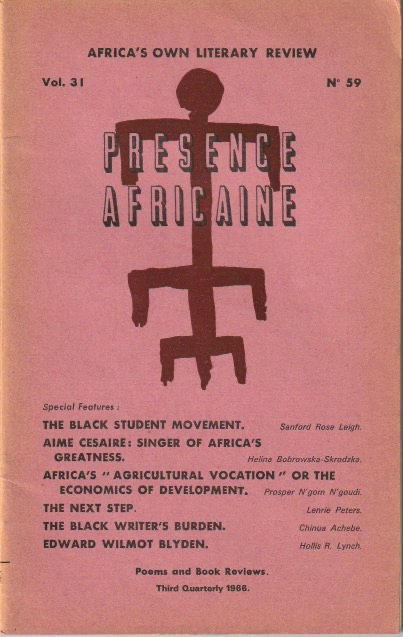
One of Achebe’s central statements on what the writer owes his society, published the year A Man of the People appeared. The issue opens with a poem by Langston Hughes, who died the following year.
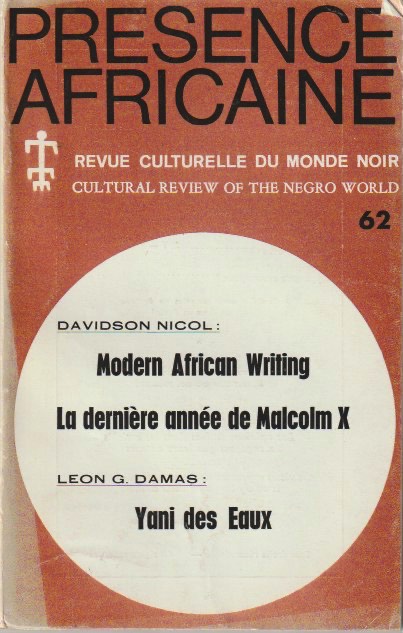
A Malcolm X memorial number that also prints the Yorùbá tragedy on the same events as Ṣóyínká’s Death and the King’s Horseman — and Ládípọ̀ is the cover subject of Akin Euba’s essays on this same shelf.