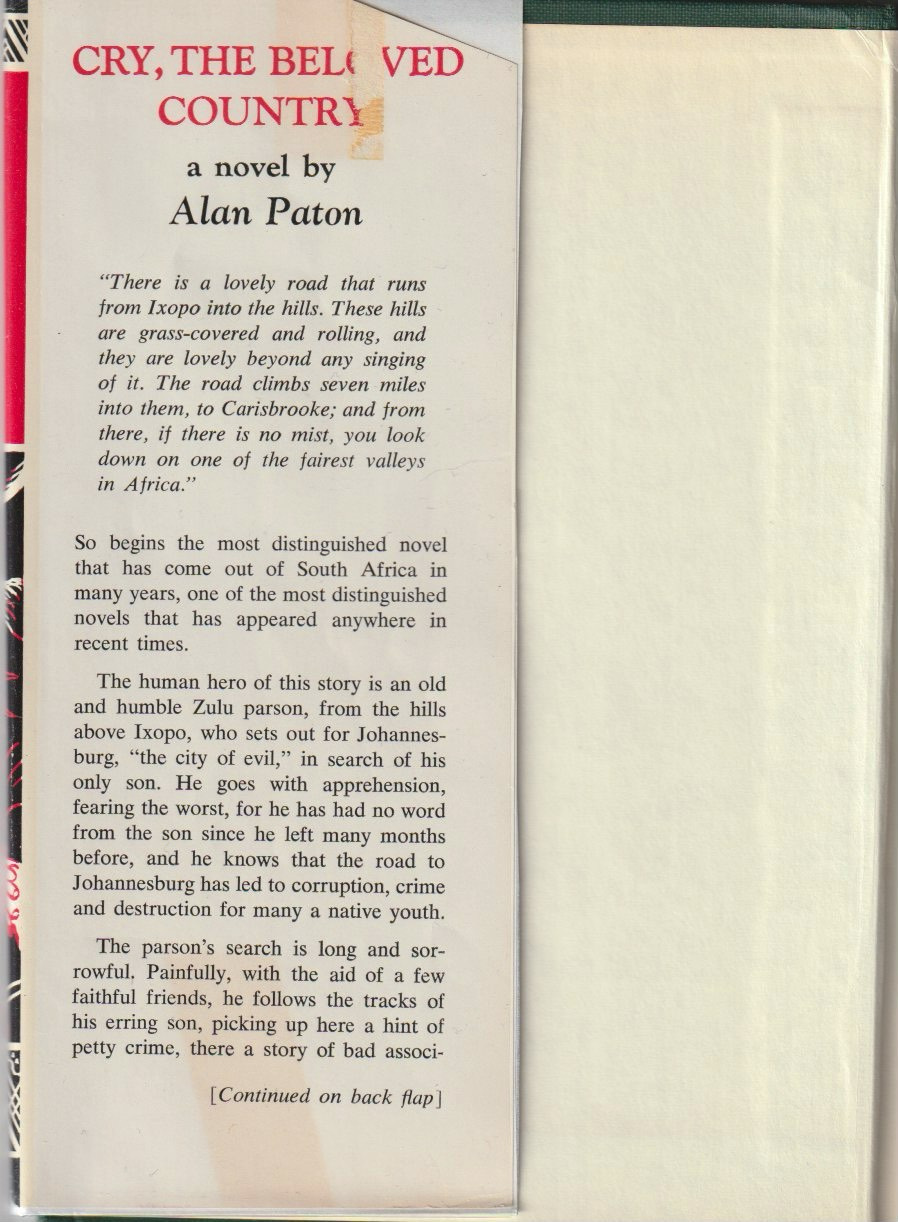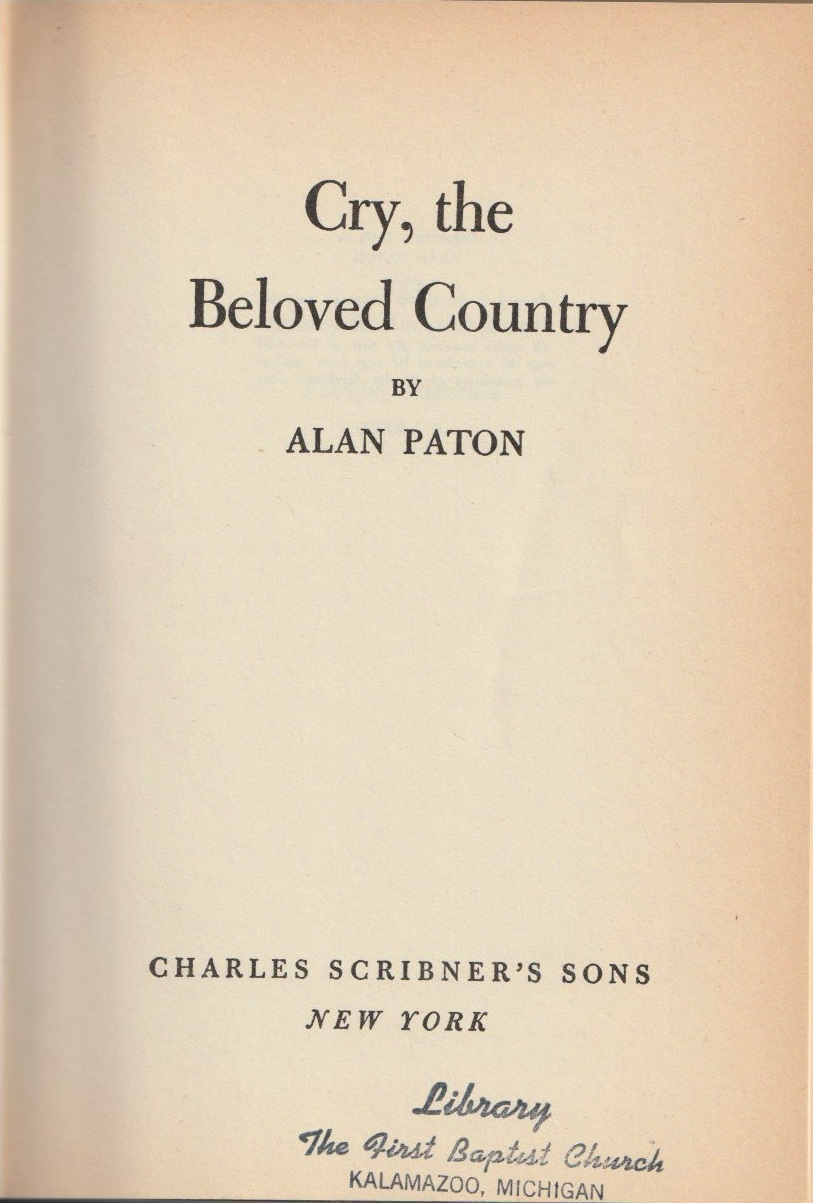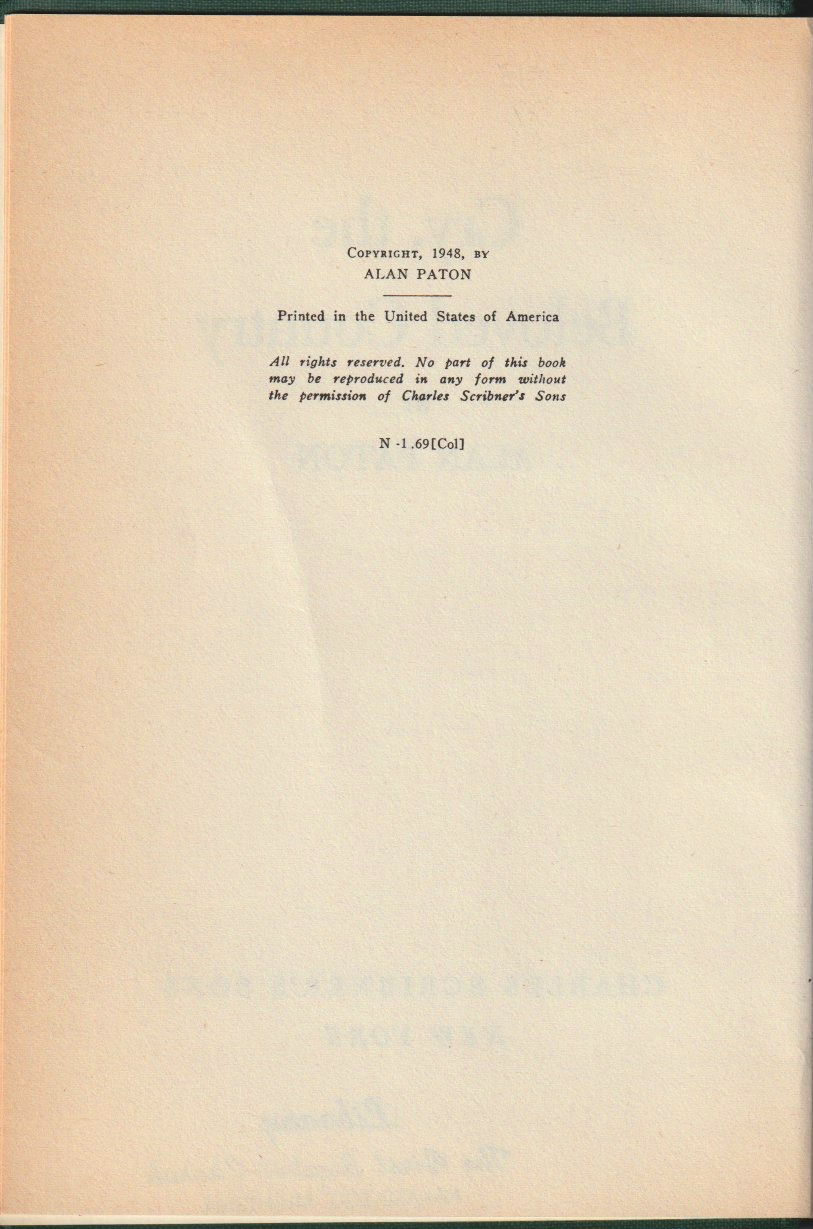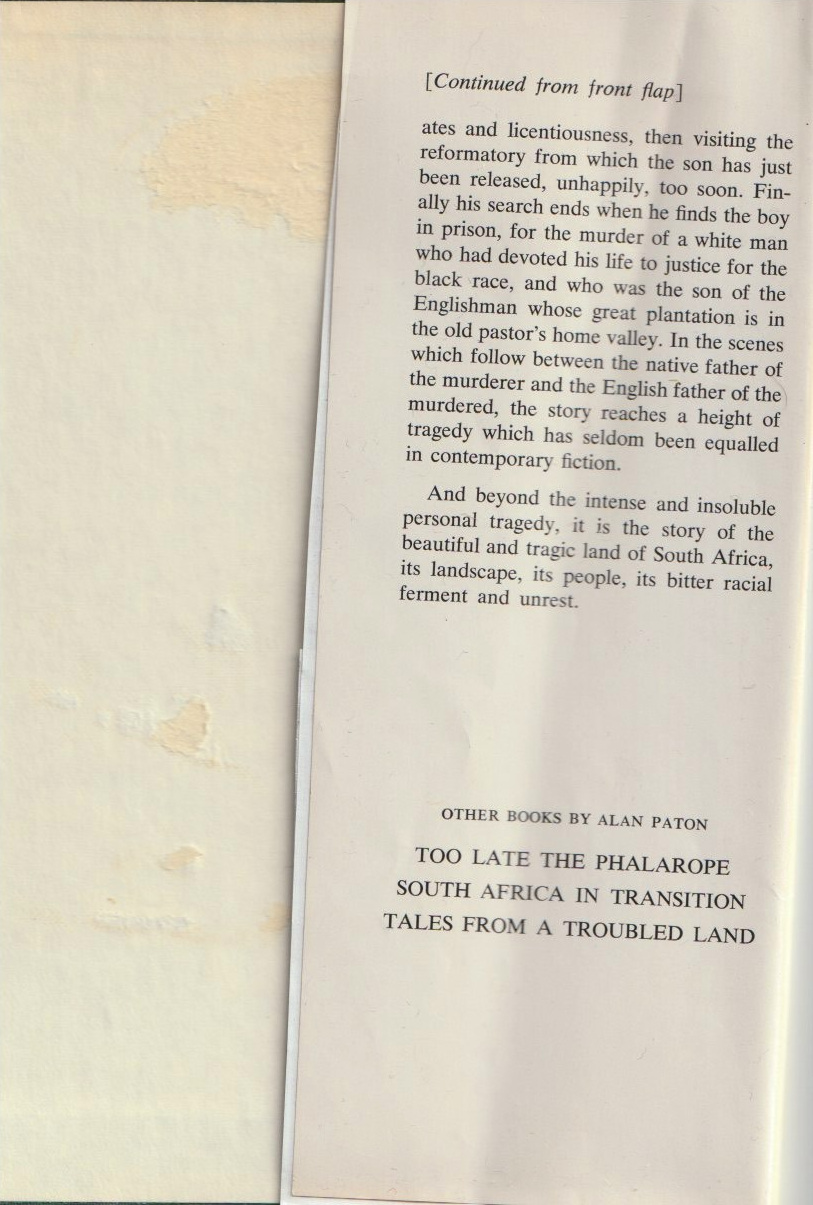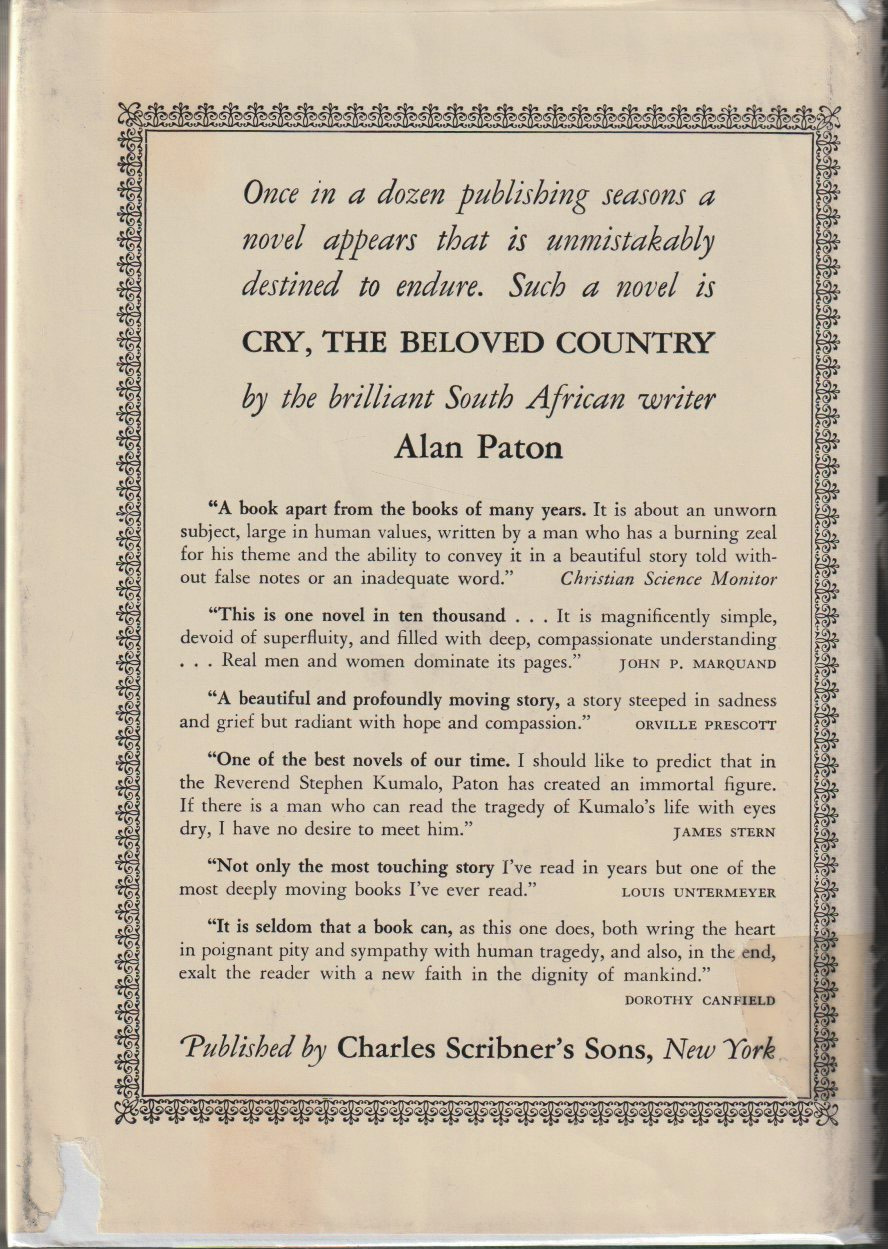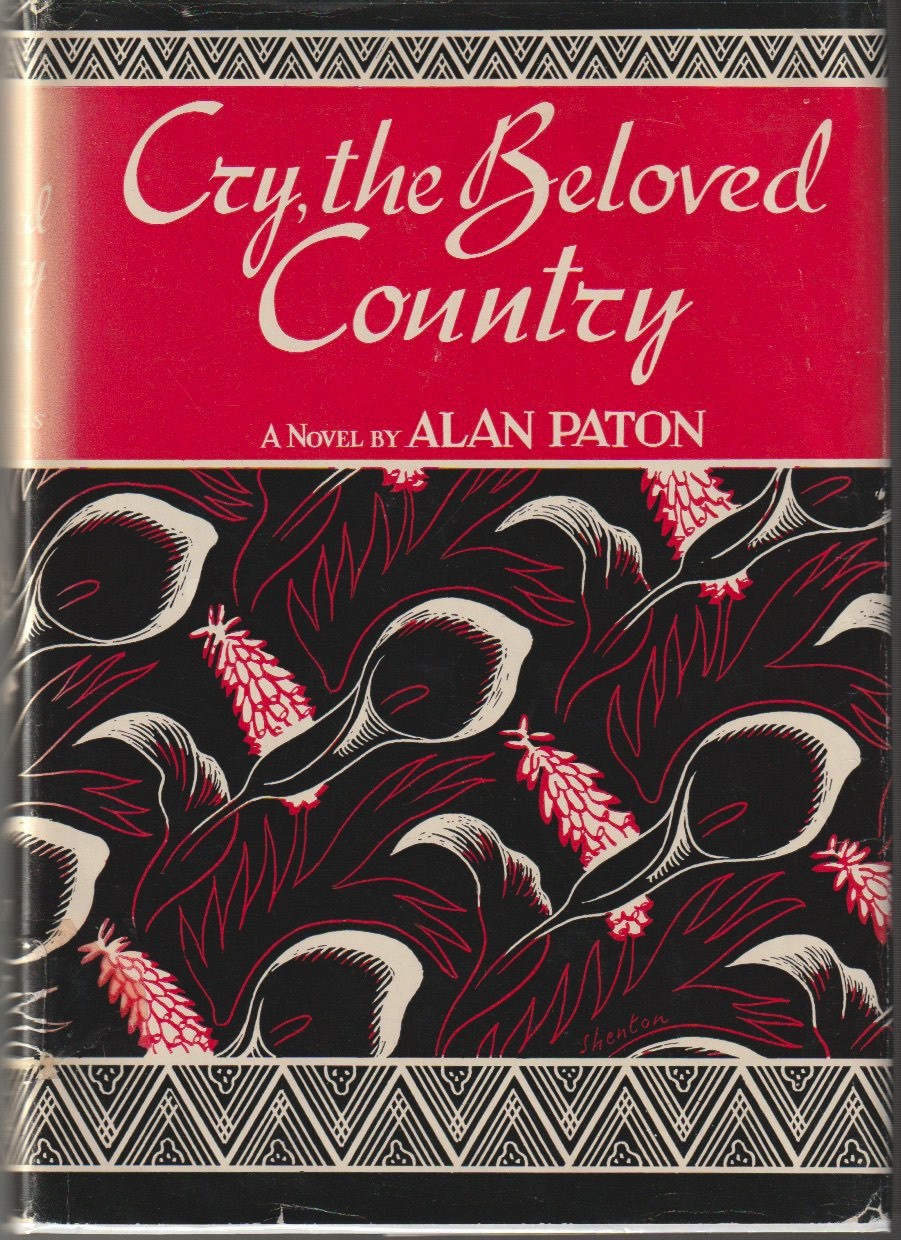
Paton’s novel of South Africa, published in New York by Charles Scribner’s Sons, the copyright line reading 1948. The jacket opens by quoting the book’s own first sentence about the road that runs from Ixopo into the hills, and calls it the most distinguished novel to have come out of South Africa.
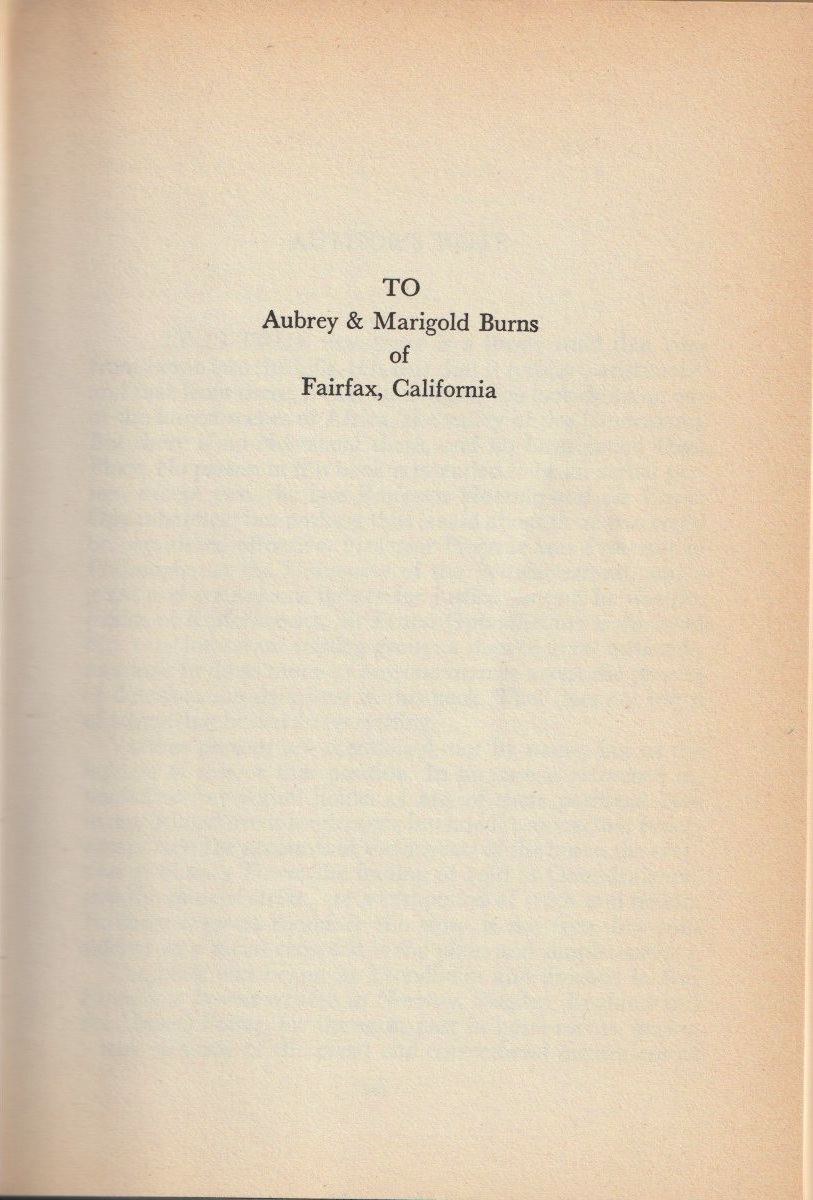
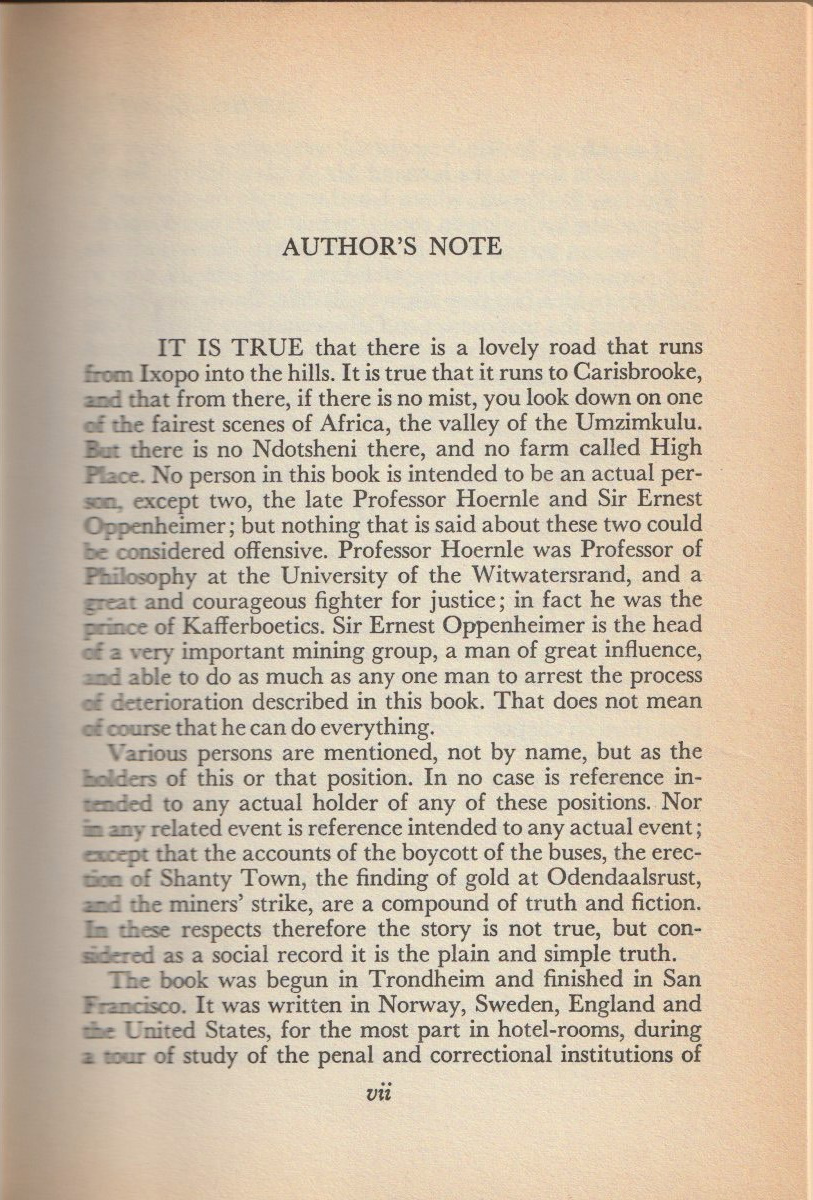
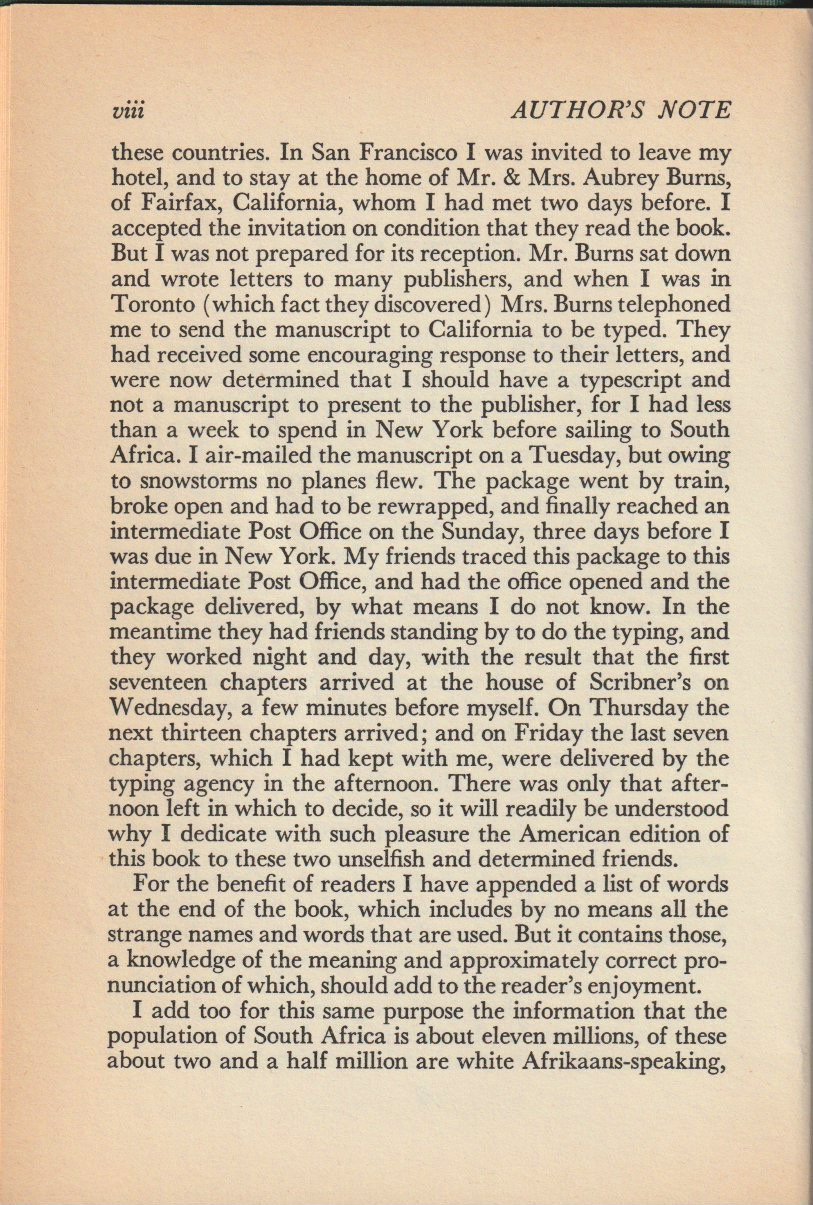
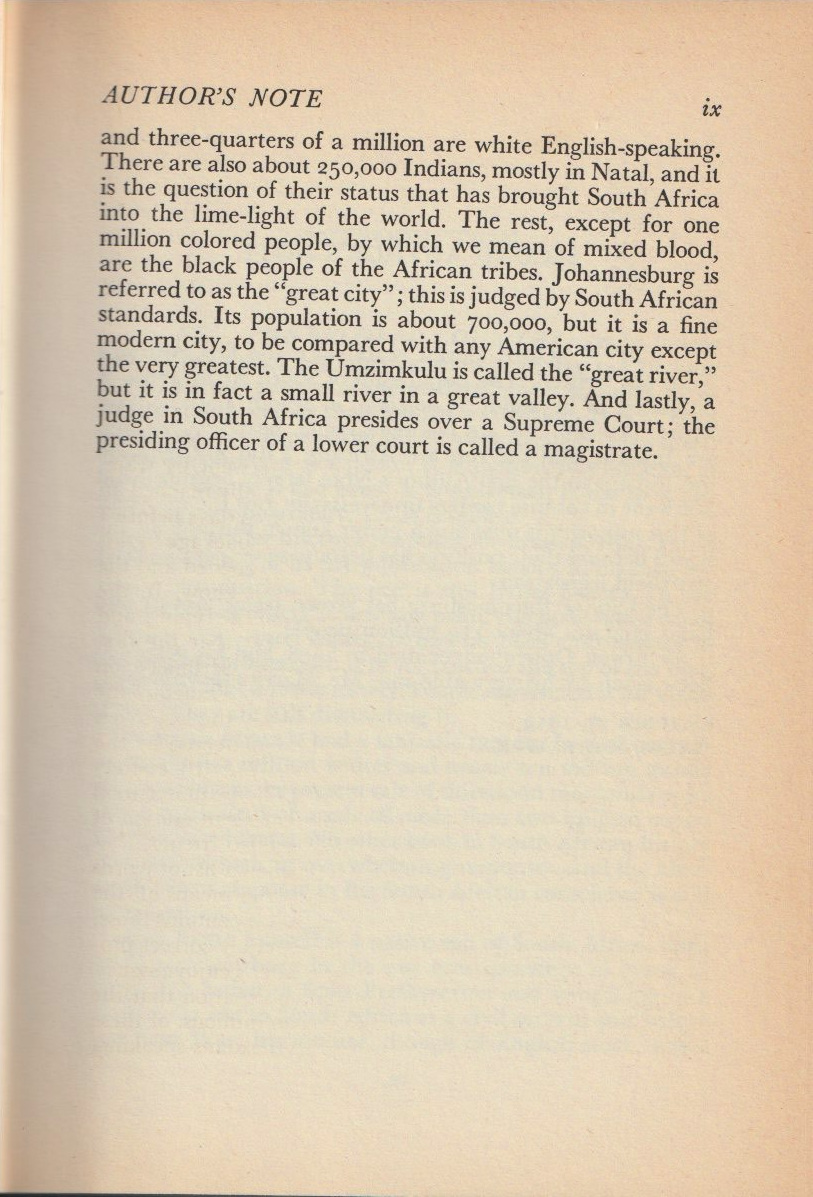
The author’s note is the most valuable thing in this copy. Paton explains that the road and the view are real and Ndotsheni is not; that only two people in the book are actual — Professor Hoernlé of the Witwatersrand and Sir Ernest Oppenheimer; and then tells how the book found a publisher. He was invited to leave his hotel in San Francisco and stay with Mr and Mrs Aubrey Burns of Fairfax, whom he had met two days before, on condition they read the manuscript. Burns then wrote to publishers on his behalf, and Mrs Burns telephoned him in Toronto to have the manuscript sent to California to be typed, so that he would have a typescript rather than a manuscript for his week in New York. The book is dedicated to them.
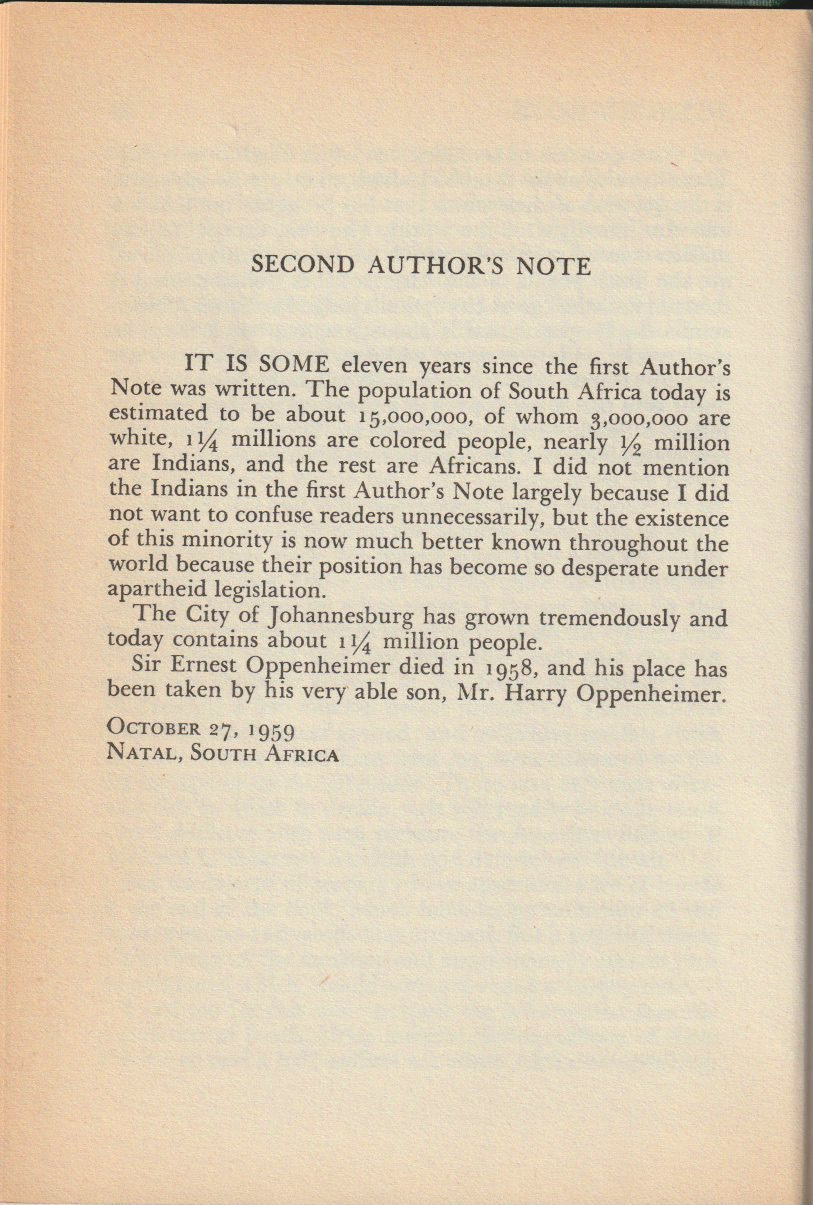
This copy also carries a Second Author’s Note, written some eleven years after the first, updating South Africa’s population figures, recording the death of Sir Ernest Oppenheimer in 1958, and observing that the position of the Indian minority had become desperate under apartheid legislation — a paragraph Paton did not need to write in 1948, and did by 1959.
It is the one item in this collection from the far south of the continent, and the only one by a white author about the country that produced apartheid.
Not the 1948 first printing. The copyright line reads 1948, but this copy contains a Second Author’s Note stating that eleven years have passed since the first, and referring to Oppenheimer’s death in 1958. That places this impression at 1959 or later. The copyright page also carries a Scribner printing code reading “N-1.69”, which may date it later still. Worth settling against the copy before this page is treated as authoritative.