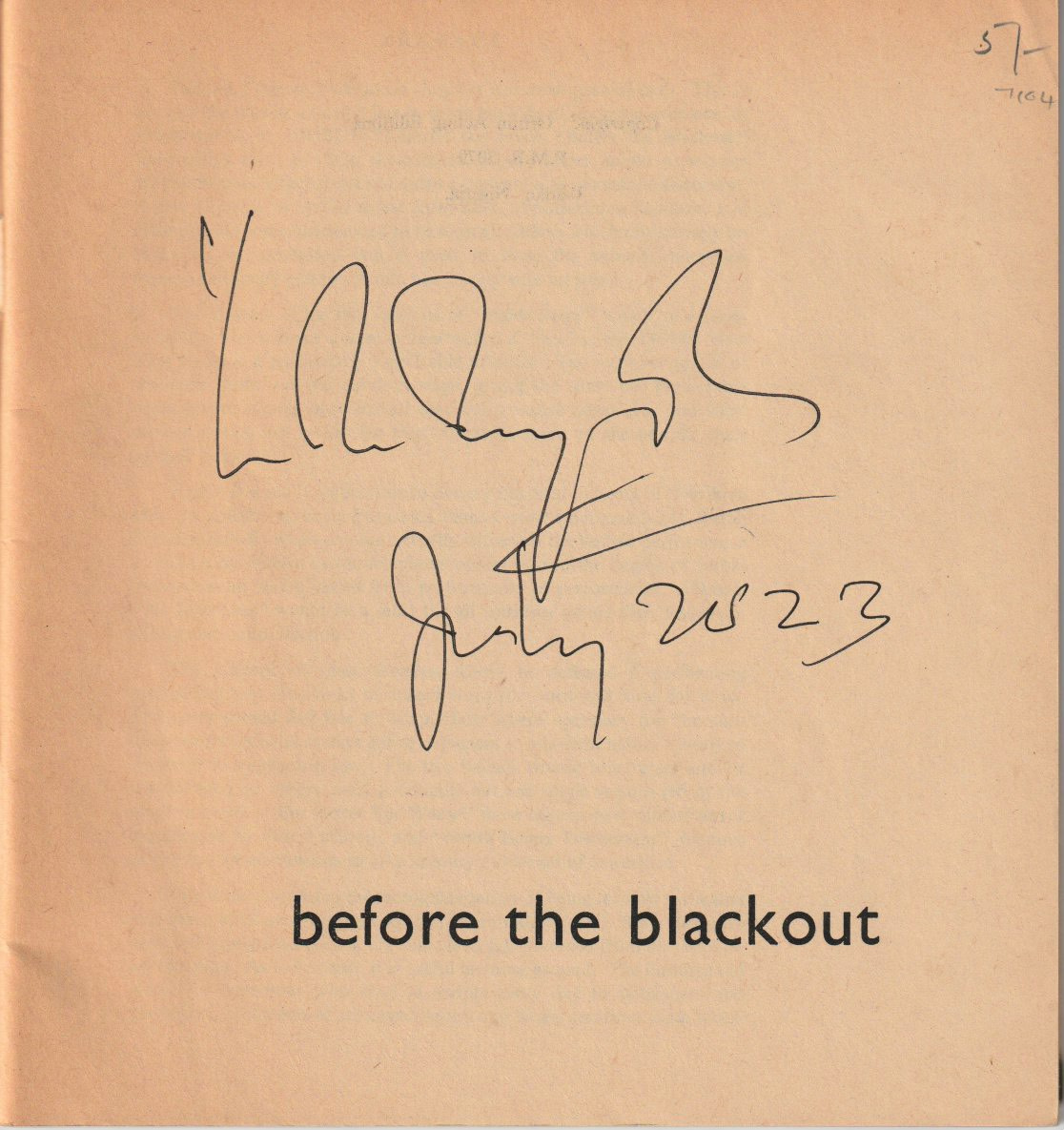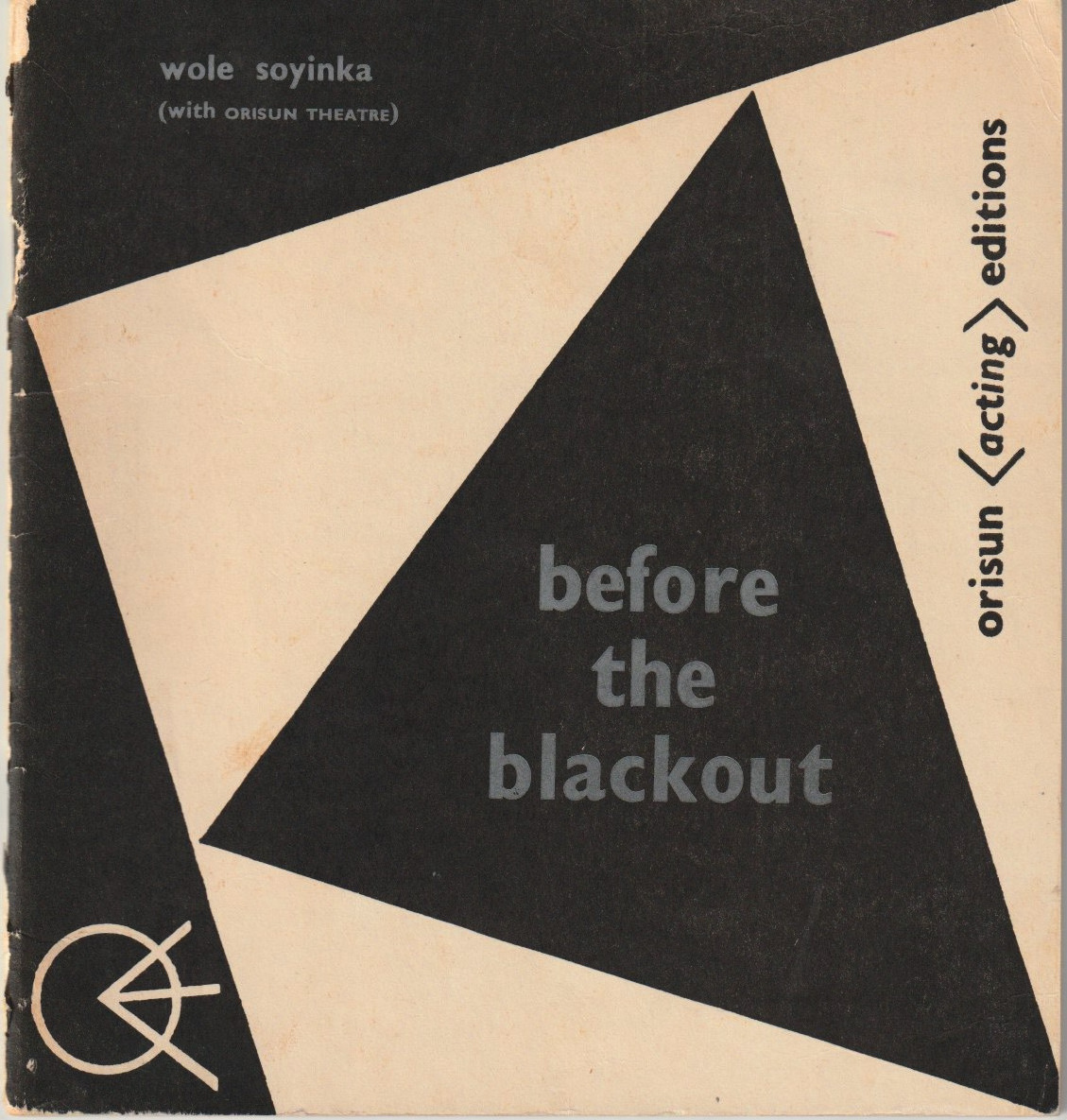
A selection of the satirical sketches from the Orisun Theatre revue of the same name — the company’s topical, fast-turnaround political cabaret, staged in Ìbàdàn in the mid-1960s. The preface is signed W.S.
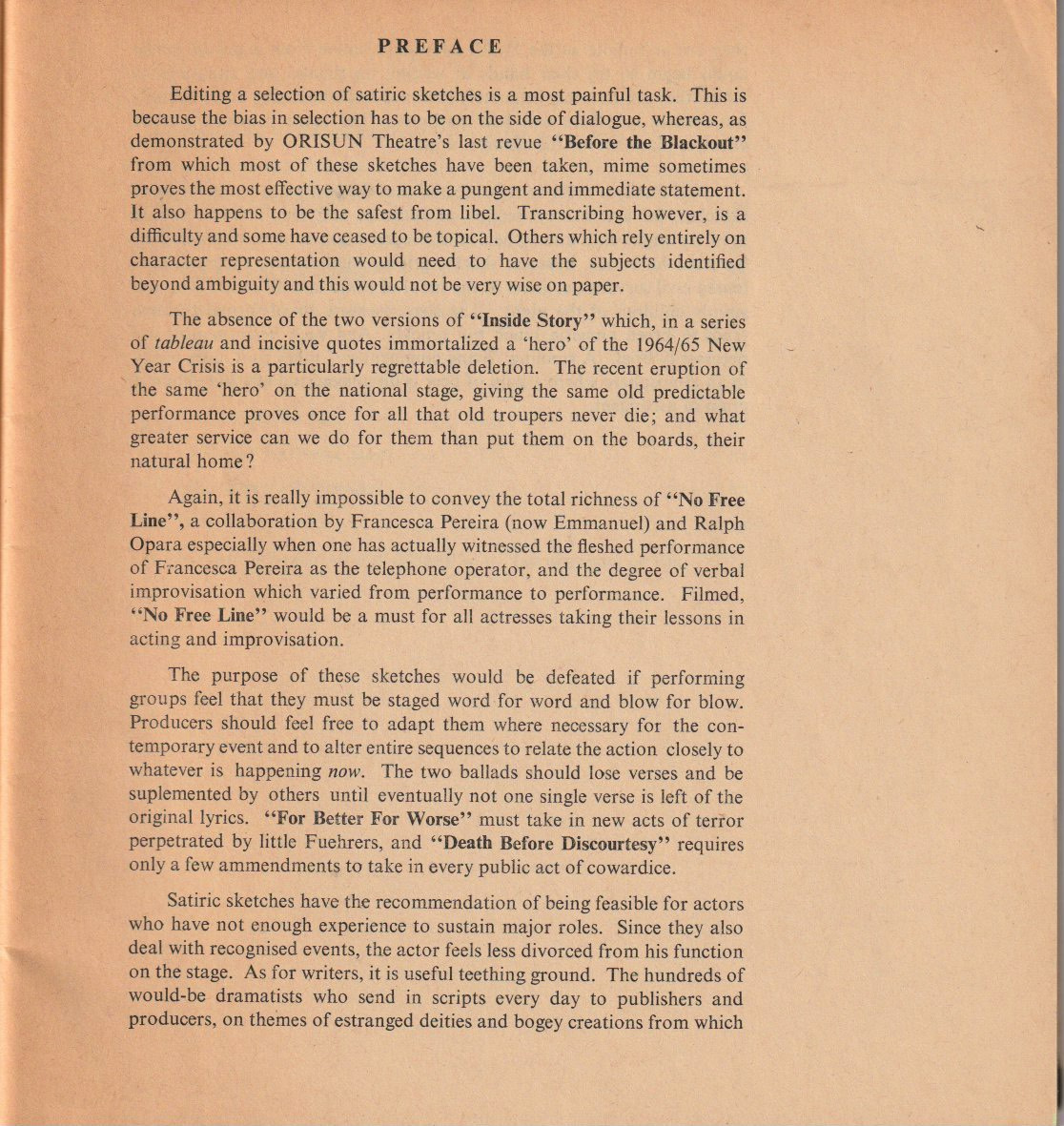
It is the most candid document in this collection about what performance loses on the page. Ṣóyínká explains that selection had to be biased toward dialogue, because in the revue itself mime was often the most effective way to make a pungent and immediate statement — and, he adds, the safest from libel. Some sketches have ceased to be topical. Others depend so entirely on impersonation that the subjects would have to be identified beyond ambiguity, which he judges unwise in print. Two versions of “Inside Story”, which pilloried a figure from the 1964–65 New Year Crisis, are omitted for that reason; he notes that the same figure had lately reappeared on the national stage giving the same predictable performance, and asks what greater service could be done for such people than to put them on the boards, their natural home.
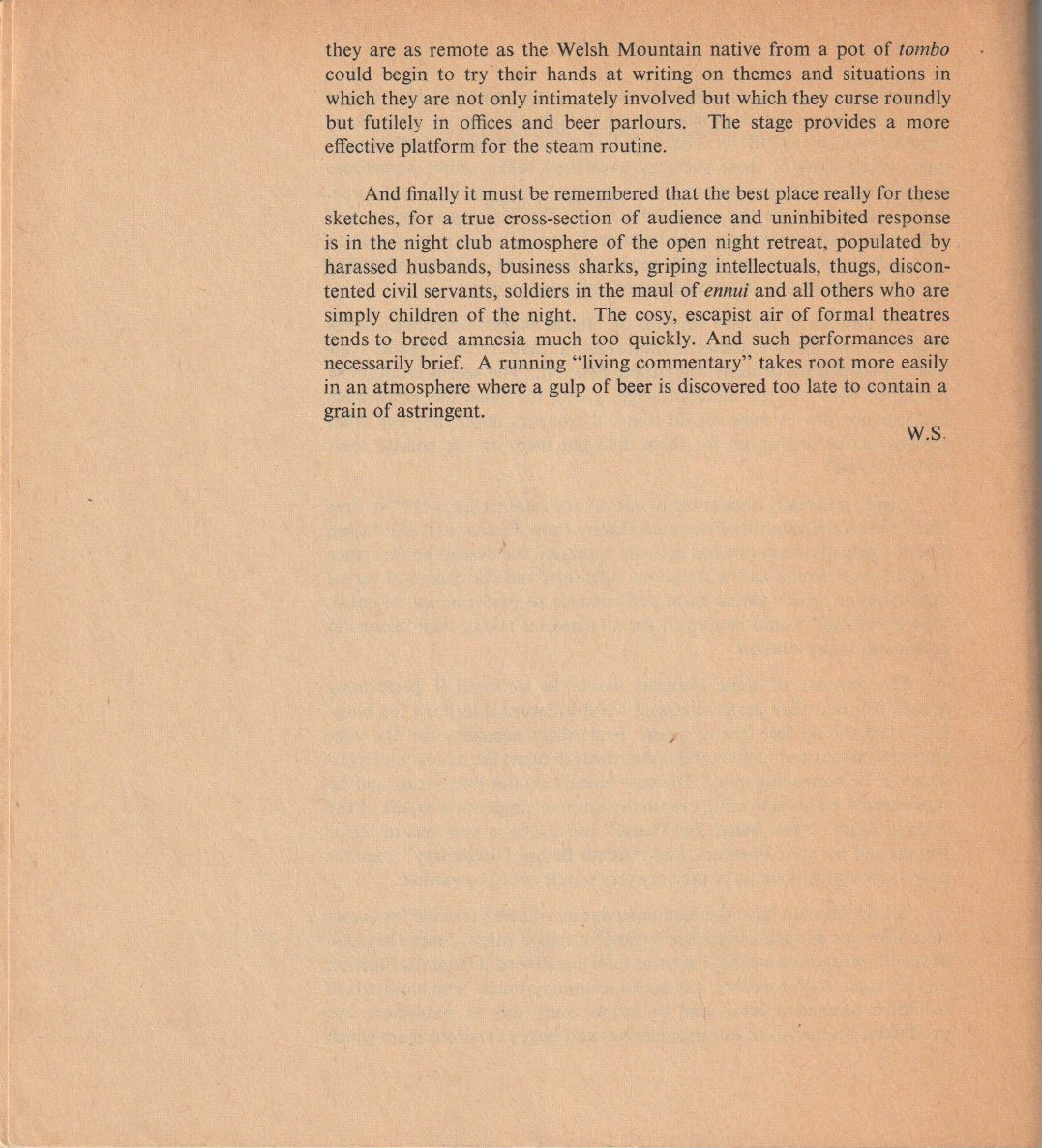
He is equally clear about where the sketches belong: not in the cosy, escapist air of formal theatres, which he says breeds amnesia too quickly, but in the night-club atmosphere of the open-air retreat, among harassed husbands, business sharks, griping intellectuals, thugs, discontented civil servants, soldiers in the maul of ennui, and all others who are simply children of the night. A running living commentary, he writes, takes root more easily where a gulp of beer is discovered too late to contain a grain of astringent.
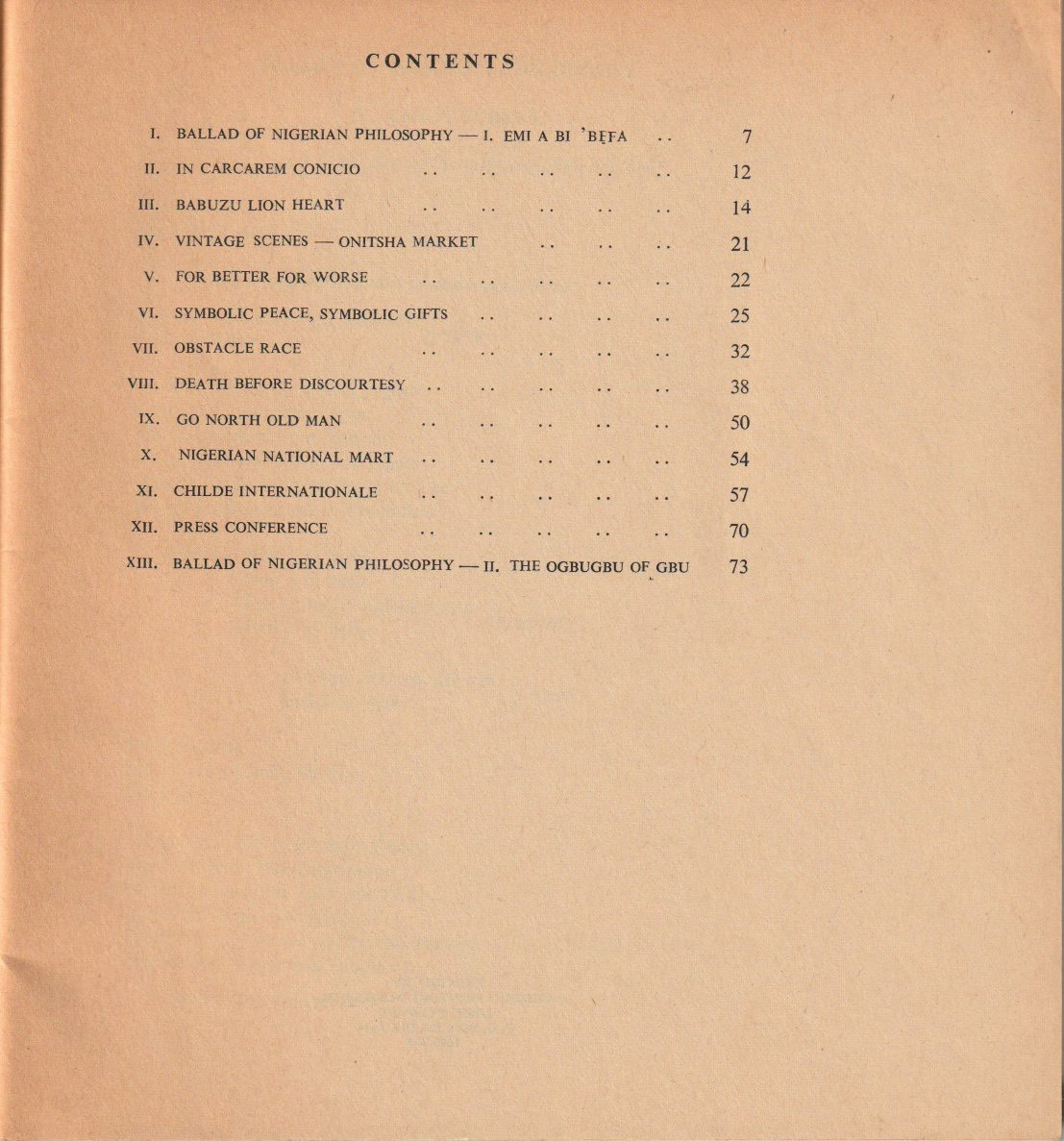
The thirteen sketches run from the Ballad of Nigerian Philosophy through In Carcarem Conicio, Babuzu Lion Heart, Go North Old Man, Childe Internationale and Press Conference. One is titled Vintage Scenes — Onitsha Market, which puts it in conversation with the Library’s Onitsha Market Literature collection. The preface credits No Free Line to Francesca Pereira and Ralph Opara — the same Ralph Opara whose Ballad of Sputnik appears in Nigerian Student Verse, held in the Sundry collection.
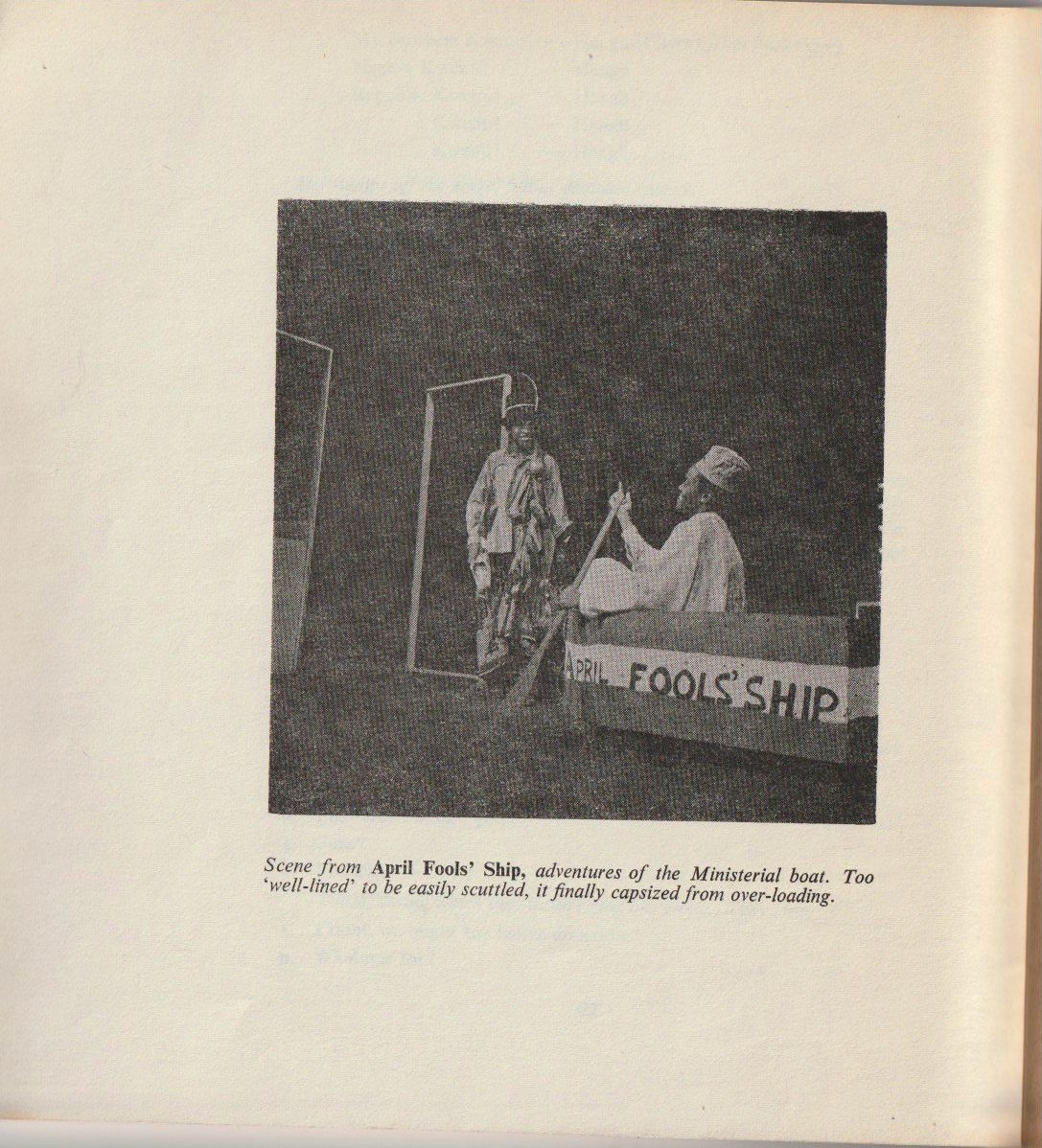
The last leaf carries a production photograph, captioned as a scene from April Fools’ Ship — the adventures of the Ministerial boat, too well-lined to be easily scuttled, which finally capsized from over-loading.
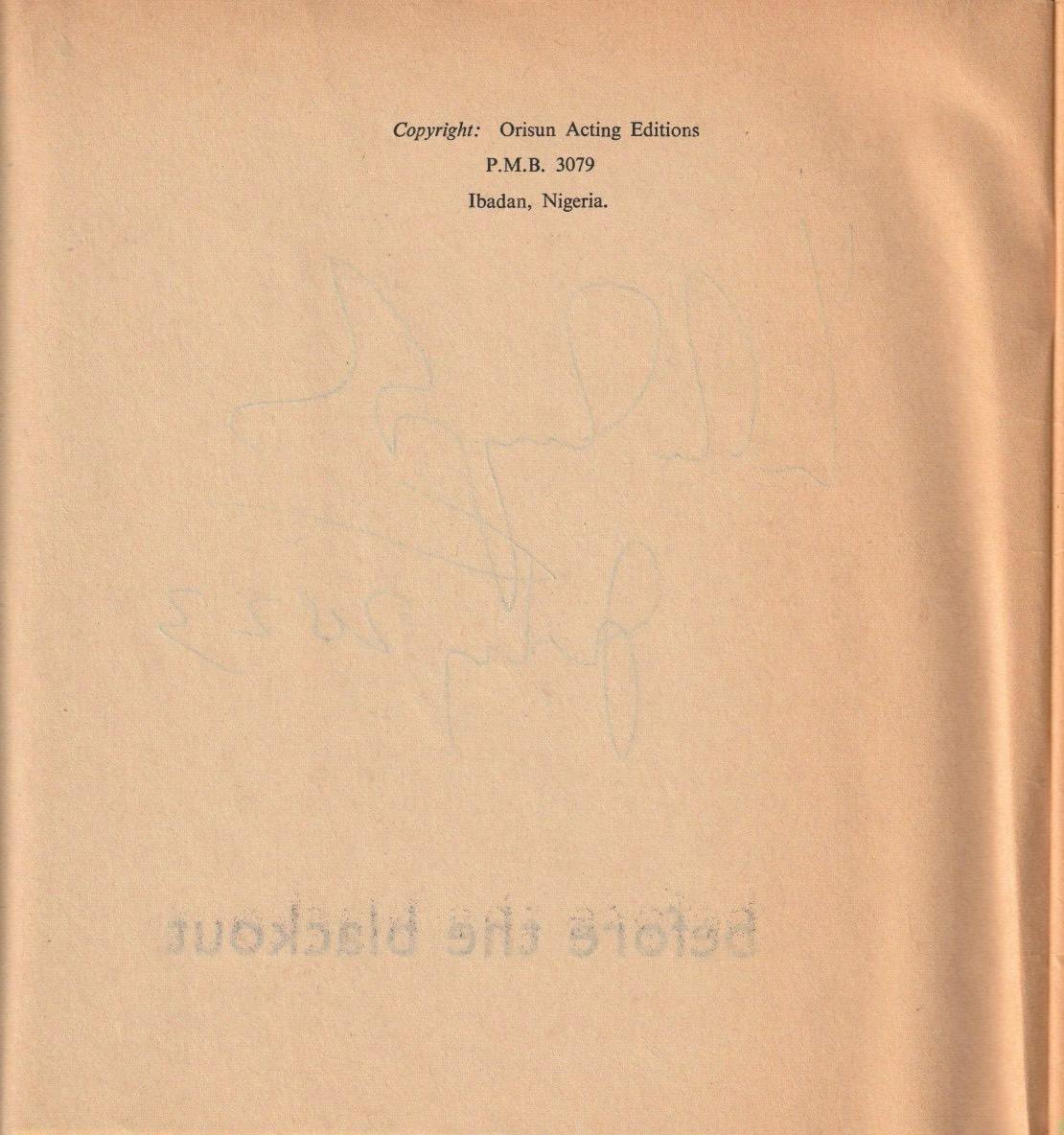
Undated. The copyright leaf gives only “Copyright — Orisun Acting Editions, P.M.B. 3079, Ìbàdàn, Nigeria”, with no year. The printer’s docket at the back reads 1696/370. The preface refers to the 1964–65 New Year Crisis as recent and to a later reappearance of the same figure, so the printing postdates 1965; beyond that the copy will not say. Its position here is provisional.